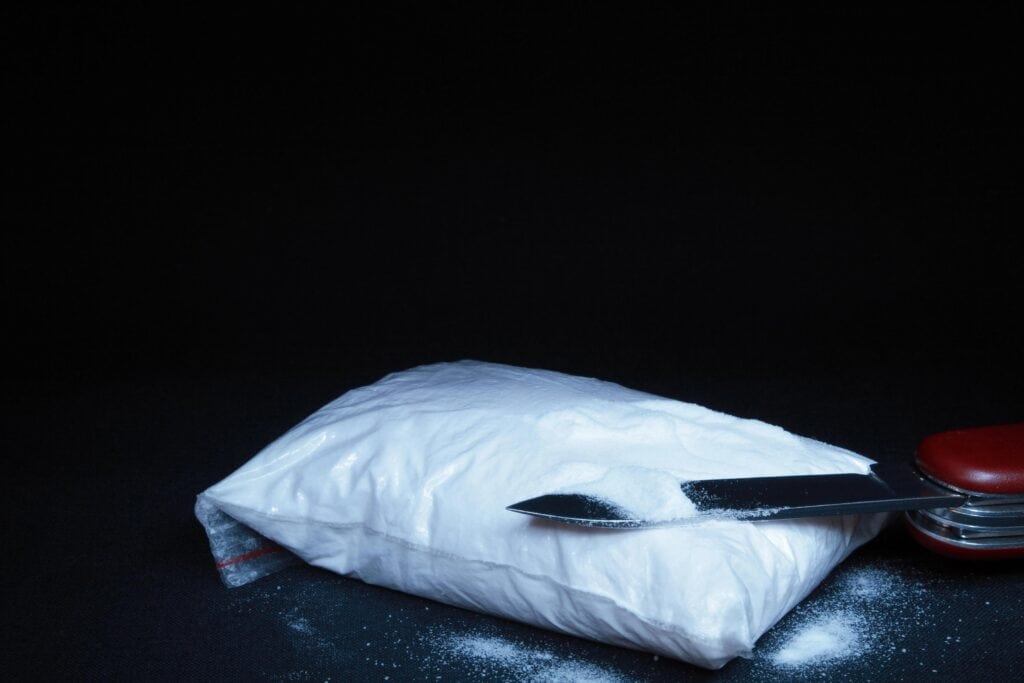
How long does cocaine stay in your system? The answer to this question depends almost entirely on the test being used: roughly one to four days in urine for occasional use, only about a day or two in blood and saliva, and as long as 90 days in hair. If you are facing a drug test or simply trying to understand what your body is doing after using cocaine, those windows are the practical answer. Knowing how the drug and its metabolites actually move through the body puts you in a better position to make clear, informed decisions about your health and your next steps.
Cocaine Basics: What It Is and How It Works
Cocaine is a fast-acting stimulant, and the central nervous system metabolizes it quickly. The drug itself has a very short half-life, usually about an hour, which is why the euphoric effects fade so fast. Clearing it entirely is a different matter. When someone uses cocaine, roughly 40% of it hydrolyzes into a longer-lasting metabolite called benzoylecgonine, and a smaller portion becomes ecgonine methyl ester. Those metabolites, not the cocaine itself, are what most clinical screenings look for, because they linger in the body long after the high is gone.
The liver does most of this work, converting cocaine into water-soluble compounds that the kidneys then filter out through urine. How long it takes for cocaine to leave your system depends largely on how much of these metabolites have built up and how efficiently your body can clear them. If you are struggling with cocaine use, you are far from alone: according to the 2023 National Survey on Drug Use and Health, about 4.8 million people aged 12 or older reported using cocaine in the past year. Structured cocaine addiction treatment through detox centers in Pennsylvania focuses on breaking that cycle rather than simply waiting for a test to come back clean.
Why Metabolites Matter More Than the Drug Itself
The gap between feeling sober and testing clean confuses a lot of people. The stimulant effects of cocaine can wear off within an hour, but benzoylecgonine can remain measurable for days. That is the whole reason drug panels target the metabolite instead of the parent drug: it gives a far wider and more reliable detection window. So when you ask how long is cocaine in your system, the honest answer is that traces of what your body made from it stick around well after you feel completely normal again.
How you use cocaine also shapes the early timeline. Snorting produces a slower, longer onset because the drug absorbs through nasal tissue, while smoking crack or injecting sends it into the bloodstream almost instantly for a shorter, more intense high. These differences mostly affect how fast the drug takes hold rather than the metabolites tests look for, so the overall detection windows stay broadly similar across methods of use.
How Long Does Cocaine Stay in Urine?
A standard urine test is the most common screening method because it reliably detects benzoylecgonine and other metabolites. For casual or single use, the detection window typically ranges from 1 to 4 days. With chronic or heavy use, those metabolites accumulate faster than the body can clear them, and cocaine in urine tests can stay positive for up to two weeks.
The same holds if you are wondering how long cocaine stays in your urine after a long stretch of regular use. And whether you are asking how long does crack stay in urine or how long does crack cocaine stay in your system, the timeline is nearly identical, since crack and powder cocaine break down into the same chemical markers.
Standard clinical guidelines, including those from national toxicology protocols, confirm that these windows fluctuate with individual health variables. Drinking extra water or exercising before a test may slightly dilute a single sample, but neither meaningfully shortens how long cocaine stays in your urine.
Urine testing is the workplace and clinical standard precisely because that wider window catches patterns of use that blood or saliva would already have missed. Because crack is simply cocaine in a smokable form, the same detection science applies to both.
How Long Does Cocaine Stay in Your Blood?
Unlike a urine screen, blood tests identify the active presence of the drug itself rather than its longer-lasting metabolites. Because cocaine leaves the bloodstream quickly, the detection window for blood is generally shorter, usually staying positive for just 1 to 2 days after use. In immediate post-incident scenarios, officers may rely on roadside screening to gauge recent impairment, and since the drug enters the bloodstream within minutes, blood testing is highly effective for confirming very recent use.
One important exception: when cocaine is used alongside alcohol, the liver forms cocaethylene, a longer-lived compound that can extend how long related markers remain detectable in the blood. Because the parent drug clears so fast, a negative blood test does not rule out earlier use, which is why clinicians often pair it with urine or hair screening for a fuller picture. This is also why someone can feel completely fine and still test positive on a urine or hair panel collected several days later.
How Long Does Cocaine Stay in Saliva?
A saliva test is an increasingly popular choice for rapid screening because it is non-invasive and simple to administer. After use, the substance shows up in oral fluids almost immediately, and the typical detection window for saliva is 1 to 2 days, or roughly 24 to 48 hours. That short timeframe makes saliva testing effective for catching very recent use, but far less useful for revealing longer-term patterns.
Because a swab can be collected on the spot, employers and law enforcement often favor it when they need a quick, supervised sample. Positive swab results are usually sent to a lab for confirmation, which reduces the chance of a false reading from food or mouthwash.
How Long Does Cocaine Stay in Your Hair?
While blood and oral fluids clear out quickly, hair testing offers the longest detection window available, identifying use for up to 90 days or more. It takes a few days for the drug to travel from the bloodstream into the hair follicles, and once it embeds in the growing shaft, it stays recorded in that segment until the hair is cut.
Because hair grows at a steady rate, a lab can even estimate roughly when use occurred by testing different segments along the strand. This makes hair the standard for long-term historical screening, though it is rarely used to detect very recent use because of the delay before the drug reaches the follicle.
Factors That Impact How Long Cocaine Stays in the System
Everyone processes substances differently, and several individual factors dictate the exact timeline for clearing the drug from your body:
- Your metabolism: a naturally faster metabolism clears substances more quickly.
- Overall liver function: because the liver processes cocaine, any impairment slows down elimination.
- Frequency and amount of use: chronic or high-dose use leads to a buildup of metabolites in the body.
- Method of ingestion: how the drug enters your body can alter initial absorption rates.
- Body composition and general health: age, body fat, and hydration all play a role in clearance rates.
- Mixing substances: this is a crucial factor. Using cocaine with alcohol, or after drinking, can raise cocaine levels in the blood by up to 30%. Mixing cocaine and alcohol also increases the peak concentration of cocaine by about 20% and creates a highly toxic byproduct called cocaethylene.
Can You Really Flush Cocaine Out Faster?
Many people search for how to get coke out of your system or how long does coke stay in your system, hoping to speed things along with water, exercise, cranberry juice, or over-the-counter detox kits. None of these reliably shorten the process, and heavy use of diuretics can actually flag a sample as tampered with or diluted.
Time is the only thing that truly clears the drug from your body. Staying hydrated, eating well, and resting simply support your normal metabolic functions while your liver and kidneys do the work. If you find yourself repeatedly trying to beat a test, that pattern itself is often a signal that use has become harder to control than you would like, and it is worth paying attention to.
Immediate Effects of Cocaine
The short-term effects on the central nervous system are remarkably brief, often lasting only 15 to 30 minutes depending on how the drug was taken. During that window, people typically feel a surge of energy, heightened alertness, talkativeness, and a racing heart, along with raised blood pressure and body temperature. As the drug rapidly leaves the system, a sudden drop in dopamine can trigger an intense crash.
Common cocaine withdrawal signs set in almost immediately after the high fades, including profound fatigue, sharp mood swings, irritability, anxiety, and depression. That stark contrast between a short high and a heavy crash is a big part of what drives the cycle of repeated use.
Over time, repeated cocaine use can strain the heart, raise the risk of stroke and irregular heart rhythms, and deepen anxiety and depression, which is exactly why addressing the underlying use matters far more than managing any single test.
Get Help for Cocaine Abuse Today
Searching for how to get cocaine out of your system is often the first quiet step toward recognizing a deeper struggle. There are no quick fixes or magical flushes, and lasting change comes from treating the addiction itself, not just waiting for a test to clear.
At MPower Wellness of Exton, we believe recovery is about reclaiming your personal power, and we help professionals and individuals throughout Chester County and the Main Line rebuild capable, purposeful lives without disappearing from their daily responsibilities. Depending on what you need, that might mean a structured partial hospitalization program Pennsylvania or dual diagnosis treatment centers in PA when substance use and mental health overlap.
For many people, that care also includes medication management and ongoing aftercare, so early progress holds long after the first few weeks. You do not have to navigate the exhaustion and anxiety alone. Reach out to verify your insurance or begin a confidential intake process today.
Take the Next Step Toward Recovery in Pennsylvania
Understanding how your body processes cocaine gives you a clinical foundation for making informed choices about your health, and none of those numbers change the fact that recovery is possible at any point on the timeline.
The team at MPower Wellness of Exton provides discreet, professional care designed to fit into your life rather than interrupt it. Whether you need help navigating Pennsylvania Medicaid or want to talk through structured outpatient options, reaching out is a practical move toward regaining your personal power. Contact our facility directly at (484) 517-3005 or start our confidential intake process to schedule a private conversation about your options. Contact us today.
FAQs
Cocaine has a relatively short half-life, but its metabolites remain in the body much longer. Most people eliminate cocaine itself within several hours, while cocaine metabolites can remain detectable for one to several days after the last dose. How long cocaine stays in your system depends on several factors, including how much cocaine was used, how often it was used, body composition, liver function, metabolism, and whether alcohol or other substances were used at the same time. Chronic users and people who use higher doses typically have longer detection windows than occasional users.
Different drug tests have different cocaine detection times. Urine tests are the most common and can typically detect cocaine metabolites for 2 to 4 days after use, although heavy or chronic cocaine use may be detectable for a week or longer. Blood tests generally have the shortest detection window, while saliva tests usually detect cocaine for up to 1 to 2 days. Hair tests have the longest detection window and may detect cocaine use for up to 90 days. Detection times vary based on the type of drug test, frequency of cocaine use, and individual metabolism.
Several factors influence cocaine metabolism and how long the drug remains detectable. These include the amount used, frequency of use, cocaine purity, body fat, age, liver function, kidney function, and overall health. Chronic users tend to retain cocaine metabolites longer than occasional users. Drinking alcohol while taking cocaine can also create cocaethylene, a compound that has a longer half-life than cocaine alone and may increase both the duration of effects and the risk of serious health complications.
Yes. Even a single use of cocaine or crack cocaine can result in a positive drug test. While an occasional user will generally have a shorter detection window than someone with chronic use, cocaine metabolites can still be detected by urine tests, blood tests, saliva tests, or hair tests depending on the timing and type of drug screen. If you’re undergoing workplace, legal, or medical drug testing, it’s important to understand that even one use may produce a positive result.
If cocaine use is becoming difficult to control, is causing health problems, or is affecting work, school, relationships, or daily life, it’s important to seek professional help. Cocaine addiction treatment may include medical detox, behavioral therapies such as Cognitive Behavioral Therapy (CBT), individual counseling, group therapy, and ongoing relapse prevention support. Because cocaine abuse often occurs alongside mental health conditions or other substance use disorders, many treatment programs also provide integrated care to address both addiction and mental health. Early intervention can reduce health risks and improve the chances of long-term recovery.
Sources
U.S. National Library of Medicine. (June 9, 2016). Metabolic Enzymes of Cocaine Metabolite Benzoylecgonine – PMC. PubMed Central.
U.S. National Library of Medicine. (April 13, 2022). Cocaine: An Updated Overview on Chemistry, Detection, Biokinetics …. PubMed Central.
U.S. National Library of Medicine. (March 3, 2017). A sensitive assay for urinary cocaine metabolite benzoylecgonine …. PubMed Central.
National Center for Biotechnology Information. Appendix B. Urine Collection and Testing Procedures and …. NCBI.
U.S. National Library of Medicine. (April 30, 2004). Detection times of drugs of abuse in blood, urine, and oral fluid. PubMed.
National Highway Traffic Safety Administration. Emerging Issues. NHTSA.
U.S. National Library of Medicine. (August 2, 2022). Effects of alcohol on metabolism and toxicity of cocaine in rats – PMC. PubMed Central.
U.S. National Library of Medicine. (February 22, 2022). Cocaethylene: When Cocaine and Alcohol Are Taken Together – PMC. PubMed Central.
U.S. National Library of Medicine. (December 27, 2018). Body mass index and its effects on liver fat content in overweight …. PubMed Central.
U.S. National Library of Medicine. (February 11, 2020). The effect of liver enzymes on body composition – PMC – NIH. PubMed Central.
National Institute on Drug Abuse. (September 27, 2024). Cocaine. National Institute on Drug Abuse.
U.S. National Library of Medicine. Examining predictors of cocaine withdrawal syndrome at the end of …. PubMed Central.
U.S. National Library of Medicine. New Medications for the Treatment of Cocaine Dependence – PMC. PubMed Central.
SAMHSA. (June 9, 2023). National Helpline for Mental Health, Drug, Alcohol Issues – SAMHSA. SAMHSA.
U.S. National Library of Medicine. (March 22, 2023). Roadside screening tests for cannabis use: A systematic review – PMC. PubMed Central.