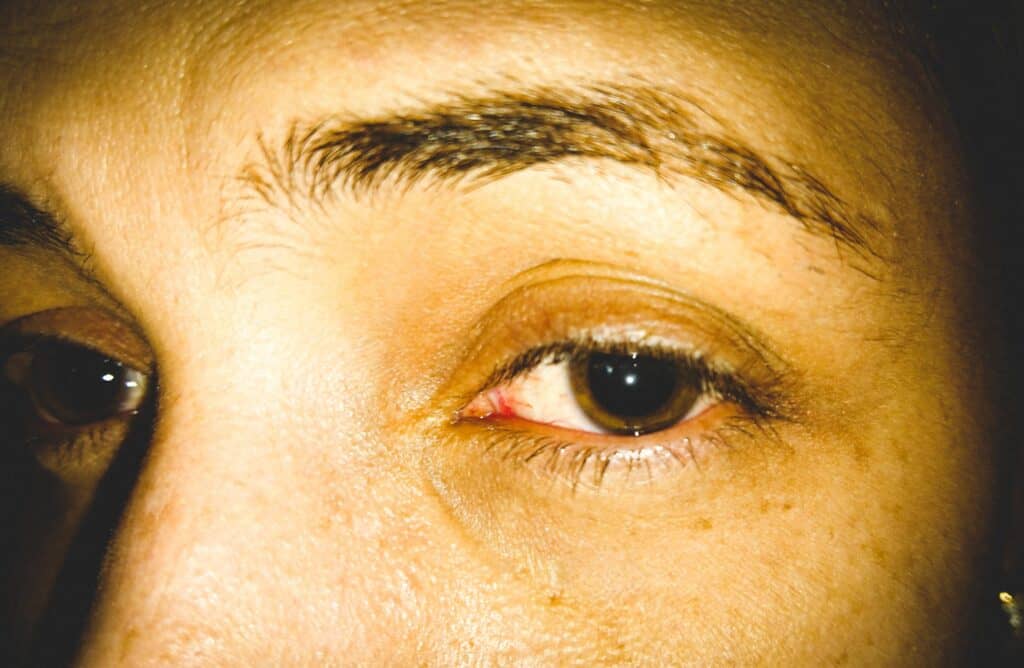
Heroin eyes is the phrase people use for the way someone’s eyes look on heroin. Pinpoint pupils, half closed lids, a glassy, faraway stare, and often a red or bloodshot tint. It is not a medical diagnosis. It is a description, and it is one of the most reliable signs of heroin use because the eyes react within minutes and the person cannot control it. For families, heroin eyes are often the first physical evidence of heroin addiction they cannot explain away.
What Are Heroin Eyes?
Heroin eyes describes a cluster of ocular manifestations, the changes in the eyes that show up while an opioid is active. The most recognizable is miosis, the clinical word for pinpoint pupils, and it is the sign that gives heroin use away fastest. Others include drooping eyelids, a drowsy or vacant look, bloodshot eyes, and dark circles underneath. Together they make a person look half asleep with their eyes open.
The term applies to heroin because heroin is the opioid most people picture, but the same look comes from fentanyl, oxycodone, morphine, and other opioids. If someone with heroin eyes swears they only take pills, the pills are opioids.
Heroin Eyes vs. Normal Pupils
A normal pupil in indoor light is about 3 to 5 millimeters and changes with the light. Heroin pupils shrink to 1 or 2 millimeters and stay there even in a dark room. Anyone can have small pupils in bright sun. Pinpoint pupils that do not open in low light mean an opioid is on board.
What Causes Heroin Eyes? Opioid Receptors and the Central Nervous System
Heroin binds to mu opioid receptors in the brain and spinal cord, the same opioid receptors painkillers target. Those receptors sit throughout the central nervous system, including in the part of the brainstem that controls pupil size. When heroin activates them, the parasympathetic nervous system, the rest and digest branch of the autonomic nervous system, takes over the muscles of the iris and squeezes the pupils shut.
That is why heroin eyes appear so fast. The drug’s influence on the nervous system starts within minutes of injecting or smoking and within 15 to 30 minutes of snorting. The same nervous system slowdown that shrinks the pupils also slows breathing, lowers heart rate, and dulls pain, which is why pupil size is one of the first things paramedics check.
Why Heroin Eyes Look Drowsy, With Bloodshot Eyes and Droopy Lids
Heroin depresses the whole central nervous system, and the pupils are one small part of that. Eyelid muscles relax, blink rate drops, and the eyes lose the small movements that make a person look alert. The result is the heavy lidded, nodding look people associate with heroin. Bloodshot eyes come from dilated blood vessels in the sclera, the white of the eye, and from dryness caused by the reduced blinking.
Signs of Heroin Use and Heroin Abuse Beyond the Eyes
Heroin eyes rarely show up alone. The other physical signs of heroin use usually appear alongside them, and the combination is what separates opioid use from ordinary tiredness.
- Nodding off mid sentence or mid task, then jerking awake.
- Slow, shallow breathing.
- Slurred speech and slowed movement.
- Flushed skin and itching, often on the face and arms.
- Nausea and vomiting, especially in newer users.
- Track marks, bruising, or small scabs along veins.
- Burnt foil, straws, or spoons with residue.
- Weight loss, poor hygiene, and a decline in appearance.
Behavioral signs follow within weeks of regular heroin use. Money disappears, sleep flips, old friends drop away, and the person gets secretive. Withdrawal symptoms between doses look like a bad flu with anxiety, and heroin dependence means they show up every day. Heroin abuse rarely stays hidden for long once the physical signs and the behavior line up.
Heroin Eyes and Heroin Overdose
Pinpoint pupils plus severe drowsiness plus slowed or stopped breathing is the triad of a heroin overdose. If someone has heroin eyes and cannot be woken, or is breathing fewer than eight times a minute, that is respiratory depression and it is an emergency. Give naloxone if you have it and call 911.
How Heroin Affects Eye Health Over Time and Why Early Intervention Matters
The pupil changes are temporary. The damage that chronic heroin use does to eye health can last. Heroin’s impact on the eyes comes through two routes, the direct effects of heroin on the nervous system and the visual system, and the indirect effects of the life that comes with heroin addiction. Heroin use can lead to trouble on both fronts at once.
Direct Effects of Heroin on Vision, From Blurred Vision to Pupil Dilation
- Blurred vision and trouble focusing. Constricted pupils let in less light, and the drug slows the muscles that adjust focus. Heroin use can lead to enough blur to affect vision for driving or reading while the drug is active.
- Light sensitivity, particularly during withdrawal, when pupils swing the other way. That vision impairment is temporary but can make daylight painful for days.
- Double vision and trouble tracking moving objects.
- Persistent pupil dilation or constriction. Long term heroin use can leave the pupils sluggish or stuck, and some people find their pupils never fully return to normal responsiveness.
Indirect Effects on Ocular Health, Poor Nutrition, Dehydration, and Infection
Most of the lasting damage to ocular health in heroin users comes from what surrounds the drug rather than the drug itself. Lifestyle factors do more harm to eye health over time than the effects of heroin on the pupils ever will.
- Poor nutrition. Heroin suppresses appetite, and people with heroin dependence often go days on almost nothing. Vitamin A deficiency impairs night vision. Poor nutrition over months contributes to dry eye, slow healing, and an increased risk of eye diseases.
- Dehydration. Opioids reduce thirst and cause vomiting. Without adequate hydration, the eyes dry out, vision blurs, and the surface of the eye becomes easier to infect.
- Weakened immune system. Chronic heroin use suppresses immune function and slows blood flow to healing tissue, so eye infections that a healthy person would fight off take hold and spread.
- Poor hygiene practices. Rubbing eyes with unwashed hands, sleeping in contacts, and skipping basic personal hygiene all raise the risk of bacterial and fungal eye infections and other eye diseases.
- Infectious diseases from intravenous drug use. Sharing needles spreads HIV, hepatitis B, and hepatitis C, and each of those can affect vision through retinal damage or infection.
Eye Infections and Endophthalmitis
The most serious eye infections tied to heroin come from injecting. Bacteria or fungi enter the bloodstream through a dirty needle or a contaminated batch and settle in the eye, causing endogenous endophthalmitis, a severe infection inside the eyeball. A study in JAMA Ophthalmology found a fourfold rise in hospitalizations for drug related endophthalmitis in the United States between 2003 and 2016, tracking the opioid epidemic. Even with treatment, the visual outcomes are often poor, and the infection can cause permanent vision loss in the affected eye within days.
Eye pain, redness, sudden blurred vision, or floaters in someone who injects needs an emergency room the same day.
Can Heroin Cause Permanent Vision Loss? Increased Risk With Chronic Use
Yes, though usually through the indirect routes. Untreated endophthalmitis, HIV related retinitis, severe nutritional deficiency, and glaucoma, which some research links to long term opioid use, can each impair vision permanently. The direct effects of heroin on the pupils reverse. The infections and deficiencies sometimes do not, and permanent vision loss becomes a real risk in long term heroin use, with intravenous drug use the biggest risk factor.
Most vision problems from heroin use are caught early enough to treat, and the eyes recover well once the person stops using and starts eating and sleeping again. Potential vision impairment is one more reason early intervention matters, though it is rarely the reason someone finally gets help. Eye health tends to recover alongside overall health, and both improve fastest with medical supervision in the first weeks.
Do Heroin Eyes Go Away After Chronic Heroin Use?
Yes. Pupil size returns to normal within 24 to 48 hours of the last dose as the drug clears the opioid receptors. Droopy lids and the glassy look fade in the same window. During withdrawal the pupils often overcorrect and stay dilated for several days, along with watery eyes and light sensitivity, before settling.
Bloodshot eyes and dark circles take longer, since they track sleep, hydration, and nutrition, which take weeks to rebuild. Someone a month into recovery usually looks noticeably different around the eyes than they did on day one, and eye health keeps improving as long as heroin use stays stopped.
Health Complications of Heroin Dependence Beyond the Eyes
The eyes are a window into heroin’s impact on overall health. The same nervous system depression that shrinks the pupils slows the normal bodily functions the brainstem controls, including breathing, heart rate, digestion, and temperature. Chronic heroin use brings health complications that go well beyond eye health. Collapsed veins and abscesses from injecting, liver and kidney disease, lung damage, and chronic constipation. The National Institute on Drug Abuse documents lasting changes in the brain’s white matter after long term heroin use that affect decision making for months after stopping.
Heroin addiction rarely travels alone. Many people with heroin dependence also have a drug or alcohol addiction alongside it, and alcohol addiction in particular multiplies overdose risk because both slow breathing. Substance abuse of any kind makes the eye problems worse and recovery harder without ongoing treatment for everything at once.
Other Causes of Pinpoint Pupils and Changes in Pupil Size
Heroin eyes are strong evidence of opioid use, but pinpoint pupils alone have other causes worth ruling out before confronting someone.
- Other opioids, including prescription painkillers taken as directed.
- Certain medications, such as clonidine, glaucoma eye drops, and some antipsychotics.
- Brain injury or stroke affecting the brainstem.
- Exposure to organophosphate pesticides or nerve agents.
- Very bright light, which constricts pupils in anyone.
Pupil dilation is the opposite finding and points to stimulants, hallucinogens, or withdrawal from opioids. Dilated pupils in a person known to use heroin often mean they are between doses and starting to withdraw.
Frequently Asked Questions
Very small pupils that stay small in dim light, half closed eyelids, a glassy stare, and often redness and dark circles. The person looks like they are about to fall asleep sitting up.
Often. Heroin dilates blood vessels on the surface of the eye and reduces blinking, which dries the eyes and leaves them bloodshot, a small but visible hit to eye health.
Pinpoint pupils in normal or low light are a strong sign, especially combined with drowsiness and slowed breathing. Alone they are not proof, since some medications do the same.
As long as the drug is active, usually four to six hours, though heavy or chronic users may have constricted pupils most of the day. Normal pupil size comes back within one to two days of stopping.
Indirectly. Medical detox manages the withdrawal symptoms that follow the last dose, including the dilated pupils, watery eyes, and light sensitivity of early withdrawal, and gets the person eating and sleeping again. The eyes recover on their own once heroin use stops and eye health has a chance to rebuild.
Yes. Fentanyl, oxycodone, hydrocodone, morphine, and methadone all produce the same pinpoint pupils and drowsy look, because they act on the same receptors. The sign points to opioids in general.
Effective Treatment for Heroin Addiction in Exton, PA
Heroin eyes are the visible part of a problem that runs much deeper, and vision impairment is only one of the ways heroin addiction shows itself. Heroin addiction is one of the hardest substance use disorders to stop without help and one of the most treatable with it. Effective treatment starts with medical detox to get through withdrawal safely, then medication assisted treatment with buprenorphine or naltrexone to quiet cravings, therapy for whatever the heroin was covering, and ongoing support that lasts well past the first month. Treating heroin addiction early, before the infections and overdoses, is what makes long term recovery likely, and the recovery journey often starts with someone noticing the eyes. Early intervention matters, and effective treatment for substance use works best before the damage is done.
MPower Wellness treats heroin addiction and other opioid addictions in Exton, PA, alongside the depression, trauma, or anxiety underneath them, through dual diagnosis programs with medication management built in. If detox is the first step, we can connect you with the right one and take it from there. Call (484) 517-3005, contact us online, or verify your insurance to start admissions.
Sources
- Mir, T. A., Papudesu, C., Fang, W., & Hinkle, D. M. (2020). Incidence of drug use–related endogenous endophthalmitis hospitalizations in the United States, 2003 to 2016. JAMA Ophthalmology, 139(1), 1–9.
- National Institute on Drug Abuse. (2026). What are the long-term effects of heroin use?
- Regina, A. C., Goyal, A., & Mechanic, O. J. (2025). Opioid toxicity. In StatPearls. StatPearls Publishing.